In my last post, I talked about how AI still trips over things a human designer could do before their morning coffee. That's still true. But here's the thing—just because a tool isn't perfect doesn't mean it isn't useful. In fact, the imperfections are where we (the humans) come in.
So instead of treating AI like a threat, I've started treating it like a slightly overeager intern—one who works fast, doesn't complain, but occasionally hands you something so bizarre you're not sure if they're okay.
AI as a helper, not a rival
Do I trust AI to design a brand identity from scratch? No. Do I trust it to get me past a blank page at 11pm? Absolutely. Probably.
The first time I realized this, I was deep in a project, stuck between two layout directions. Instead of spinning my wheels, I tossed the concept into an AI tool and asked for ten quick variations. Eight of them were garbage, one was passable, and one made me go, "Huh… okay, that's interesting." That was enough to get me moving again.
Where AI actually shines
Here's where AI has been a game-changer for me:
- Brainstorming variations on ideas I've already sketched.
- Creating quick "what if" visuals for clients without burning three days in Illustrator.
- Automating boring prep work—resizing, mockups, file conversions.
- Speeding up research—finding reference images, competitor screenshots, and color palette inspiration.
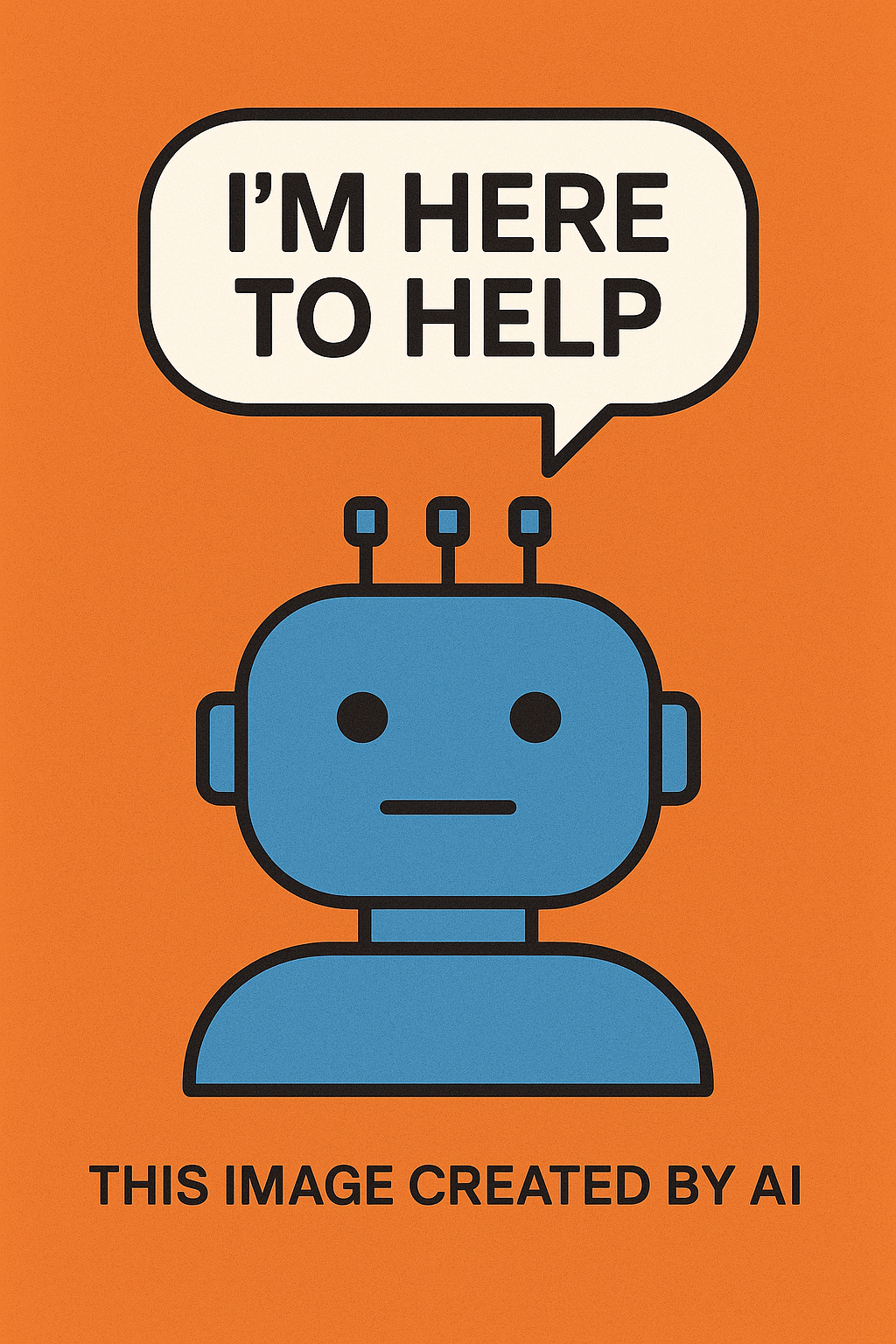
- Generating quick images, like the one featured in this article!
So, it's not about outsourcing creativity. It's about clearing the mental clutter so I can focus on the good stuff.
Keeping the human in the loop
AI can be fast, but it doesn't have taste. It doesn't understand that "bold and modern" can either mean a clean, timeless wordmark, or something that looks like a nod to System 6 from Apple (still the best OS ever, by the way).
That's where we come in. We make the calls. We know when something feels right for a brand—and when it's about to send the wrong message entirely. AI can produce a hundred options, but only we know which one actually works.
Learning to talk to the machine
Working with AI is a lot like working with a new junior designer:
- Be crystal clear about what you want.
- Show examples.
- Expect to send them back for revisions.
The more specific I get in my prompts, the better the results. It's creative direction—just for a machine instead of a person.
Why embracing AI makes us more valuable
Here's the real win: if AI can handle the 30% of my work that's repetitive, I get to spend more time on the 70% that actually moves the needle—conceptual thinking, creative problem-solving, etc…
When you look at it that way, AI isn't coming for our jobs—it's coming for our chores. And the more we learn to use it well, the more we can focus on the work only we can do. That's the part I'm not giving up without a fight.
If you're a designer still on the fence, start small. Let AI handle something you'd normally groan about doing, and see what happens. Worst case, you wasted a few minutes. Best case, you get back hours—and your sanity.