Why Designers Still Have the Upper Hand Over AI (For Now)
A real-world test of AI's design capabilities reveals why human designers still have the edge when it comes to taste, nuance, and client-ready precision.
A real-world test of AI's design capabilities reveals why human designers still have the edge when it comes to taste, nuance, and client-ready precision.
We've all played with AI by now. Whether it's generating a meme of Donald Trump marrying Kamala Harris or creating a skyscraper-sized backyard dog, AI's ability to make the impossible look real is… pretty fun.
But as the tools improve, the big question keeps creeping up, especially in creative circles:
Is AI coming for our jobs?
I work in design, so naturally, that's where my mind goes. If AI can fake a photo of a giant golden retriever, surely it can knock out a logo design or branding project. Right?
Not quite.
Recently, DC unveiled a modernized version of the iconic Superman logo—a fresh take that still pays homage to the original. It's clean, bold, and well-executed. Naturally, I wondered: Could AI recreate this?
Not remix it. Not "inspire a new one." Just recreate it—faithfully and cleanly.
So I ran a test. I uploaded the logo to several AI tools (including ChatGPT with image input) and gave a straightforward prompt:
"Recreate this as an editable vector graphic. Clean lines. Separate layers. Match this exact style."
It should've been simple—especially since I already had a vector version myself to compare against.
This is what ChatGPT gave me. Gross.
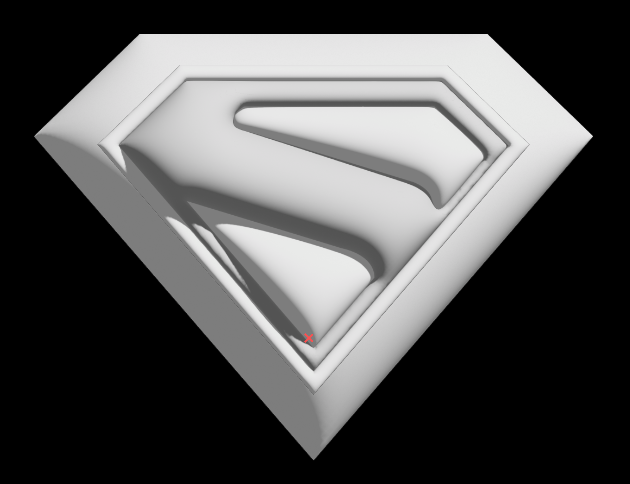
A proper, clean vector recreation - what AI should have been able to produce.
Now, let me be clear: this wasn't a creative challenge. I wasn't asking for logo inspiration. I was asking for reproduction. This was a test of visual recognition and technical output. And AI flunked it—badly.
AI can generate images, but design is more than image generation.
Design is context. Purpose. Vibe.
It's solving a problem, not just drawing shapes.
A good designer thinks:
AI doesn't naturally think in those terms. Unless you spoon-feed it those layers of context—and even then, the results can be hit-or-miss.
Not at all. I use it all the time. It helps with brainstorming, content writing, and early-stage ideation.
But when it comes to real design work—especially anything that requires taste, nuance, or client-ready precision—it's not there yet.
AI can make fast drafts. But fast isn't the same as good.
Yes, AI is improving fast. But it still struggles with interpretation, execution, and refinement—three things designers do instinctively.
The best tools in the world are still just that: tools. They don't replace skill. They don't replace experience. And they definitely don't replace taste.
So no, designers—your job isn't going anywhere just yet.
But your process? That might be evolving. And that's not a bad thing.
If you're a designer wondering how to stay relevant:
Keep experimenting. Use AI when it helps. But never stop trusting your eye, your instincts, and your ability to solve real human problems. That's the part AI still can't touch.